
(BPT) - Wireless chargers are built by many brands for a wide array of small mobile electronics, so how do you know which ones work the fastest and help devices stay charged longest?
The best way to charge your cell phone, wireless headphones or smart watch depends on something you've probably never heard of: the Qi standard (pronounced "chee"), which was first released in 2010 by the Wireless Power Consortium (WPC), a standards development organization that works with the world's top tech companies to set the world's leading standard for ensuring that wireless charging of small mobile electronics works smoothly and efficiently - no matter what brand's products you're using - and provide protocols that enhance wireless charging safety.
Since 2023, devices created in accordance with the newer version of the standard, Qi2, have offered wireless charging that's faster and more energy efficient, providing optimal charging performance. Over 100 of the biggest names in technology worked together to create the Qi2 global standard in wireless charging. In 2025, technological advancements enabled an even faster-charging version of the Qi2 standard: Qi version 2.2.1 (also called Qi2 25W), which raises the power delivery from 15 to 25 watts.
"Our goal is constant improvement," said Paul Struhsaker, executive director of WPC. "When we launched Qi2, besides the immediate boost in charging speed and energy efficiency, one of its benefits was serving as a steppingstone for even faster, more efficient wireless charging in the future. This is demonstrated by Qi2 25W's remarkably fast, efficient wireless charging."
In addition to the Apple iPhone, major Android smartphones have now joined the Qi2 ecosystem, making the list of Qi2 Certified devices even longer. There are now nearly 2 billion Qi and Qi2 devices in use by consumers across the world.
Here's why the charger you use matters, and how to ensure you're getting the best product to keep your essential devices up and running all day.
Why wireless charging?
Tired of looking for cables, fumbling to plug in devices in the dark or small spaces - or even wearing out the port in your gadgets with the constant plugging in?
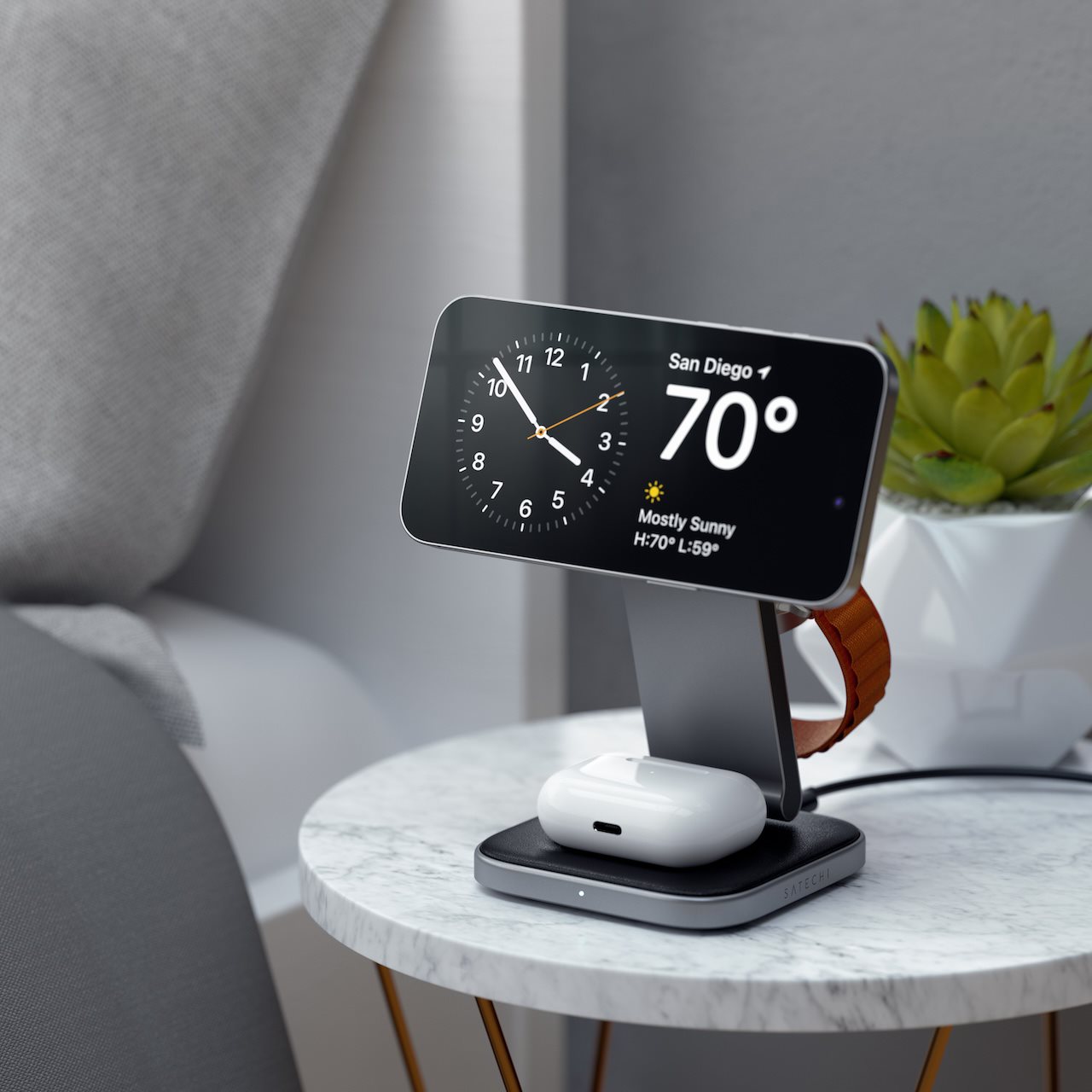
Wireless charging with devices built to the Qi2 standard provide one clean charging setup with minimal cords, less fuss and minimal mess. That means you can even charge your compatible phone(s), smartwatch and earbuds all at the same time, without worrying about tangled cables.
Wireless chargers come in a variety of designs to meet user needs whether for home, office, car or traveling. Regardless of the design, all Qi2 chargers employ a magnetic attachment between your Qi2-enabled phone and charger that ensures a perfect alignment for optimal energy efficiency every time. Simply drop your phone on the charger and you'll feel the click as the devices lock together.
The need for speed
Faster wireless charging was the number one consumer-requested feature to improve wireless charging satisfaction, according to WPC market research. Qi2 took a big step in addressing this demand for faster charging when it first launched with 15 watts of charging power in 2023.
The result? Some Qi2 Certified devices charge phones as fast as from 0% to 50% power in about 30 minutes.
"Qi2 25W is the first standard to enable truly high-speed wireless charging," added Fady Mishriki, chair of the WPC Board of Directors. "Consumers will be delighted when they experience Qi2 25W, as it delivers nearly 70% more power than the original Qi2."
How to keep your phone from dying
One of the worst things about using small devices is when they conk out right when you need them, sending you scrambling for a charger.
Qi2 chargers use a magnetic attachment that creates perfect alignment between your phone and the charger, enabling faster, more efficient charging. The satisfying magnetic snap lets you know when devices are perfectly aligned and charging, so you can just pop your device on the charger and go, without worrying about whether your device found the charging "sweet spot" or not. You can trust they'll be charging and will stay charged longer.
Rather than waiting until your phone is nearly dying to charge up, try to keep the charge between 20%-80% for maximum efficiency and optimal battery health. You can use strategies like reducing screen brightness, turning off push notifications you don't need and disabling background app refresh to keep your phone going even longer.
It's also recommended to keep devices away from heat, which can be damaging to batteries (whether the heat is external or internal). Chargers built to the Qi2 standard offer advanced thermal management that prevents overheating and helps protect batteries from degradation.
How to be sure it's a Qi2 Certified wireless charger
Qi2 Certified chargers are designed for interoperability - ensuring any Qi2 Certified device works smoothly with other Qi2 devices regardless of brand - plus energy efficiency. Furthermore, chargers certified to the Qi2 standard include important safety features such as thermal management to keep chargers from overheating and foreign object detection. Non-certified chargers may not include these features which safeguard user safety as well as the health of your charging devices.
To ensure you're getting a Qi Certified charger before you buy, examine the box and/or the charger to look for the Qi or Qi2 logo. Buying online? Check the product's wireless specifications for Qi certification first. If in doubt or you can't find the logo, check the Wireless Power Consortium website where they maintain a database of all Qi Certified devices.
Beware of chargers that use claims like "Qi compliant" or "works with Qi." These terms are used by brands that are not certified and hope you won't notice the difference. Virtually all major wireless charger brands produce Qi2 Certified wireless chargers, including Belkin, Anker and Baseus, to name just a few. Qi Certified cell phones include iPhone, Samsung and Google Pixel.
If you haven't tried Qi2, you haven't really tried wireless charging. Learn more about the Qi2 standard at ChargeWithQi.com.