
(BPT) - Across the country, developers are breathing new life into abandoned hospitals, historic churches, vacant offices and deserted malls, transforming these underutilized buildings into apartments, hotels and mixed-use spaces through adaptive reuse strategies.
Adaptive reuse is an attractive option for many developers and building owners and has been steadily gaining popularity over the last couple of decades. According to RentCafe, in 2024 alone, close to 25,000 apartments from adaptive reuse projects were completed in the U.S., representing a 50% increase from the prior year.
Why has this trend taken off? Because adaptive reuse repurposes existing buildings instead of demolishing them and starting fresh, check out this YouTube link for a method that can lead to lower construction costs, speed project delivery, enhance sustainability and extend the life of existing structures. That said, adaptive reuse comes with its own challenges, especially when it comes to plumbing.
Plumbing challenges when converting existing buildings
Converting structures originally designed as offices or other commercial purposes into residential or hospitality spaces often presents plumbing challenges. Because these buildings weren't built to accommodate additional wet areas like bathrooms, kitchens or laundry rooms, installing traditional below-floor plumbing can require extensive demolition or costly infrastructure changes.
For example, when the project team at ABA Constructors Inc. was tasked with reimagining a Clearwater, Florida, office property's plumbing infrastructure to support residential and hospitality demands, they knew they had quite the challenge on their hands.
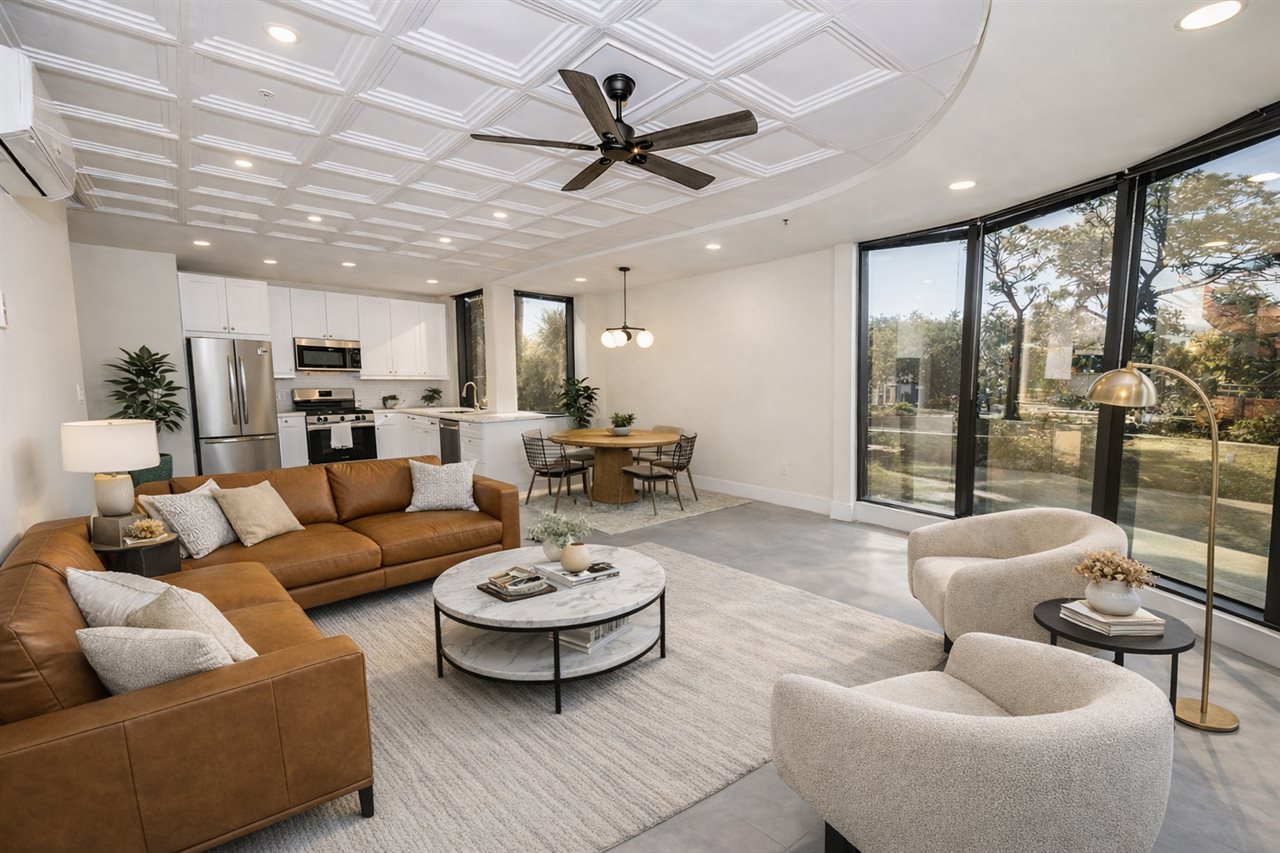
The mixed-use project called for approximately 80 apartments and 40 hotel units, requiring more than 110 bathrooms. The original structure of the building was not designed to support this level of plumbing density. Without a closely spaced plumbing stack, a traditional gravity plumbing system was a non-starter.
Another issue that the team had to deal with was the fact that multiple floors remained occupied by office tenants with active leases. Traditional plumbing methods would have required cutting into structural concrete slabs, disrupting tenants below.
Had the ABA team decided to move forward with below-floor plumbing, the contractors would have had to install all the plumbing at night or shut down the occupied spaces. However, they decided to move forward with a creative, alternative method that allowed the team to avoid unnecessary and disruptive demolition: Above-floor plumbing.
How a flexible plumbing solution makes adaptive reuse possible
Above-floor plumbing solutions - like grinder and drain pumps - allow developers, architects, engineers and contractors to add wet areas without breaking concrete floors. In the case of the Clearwater building, the ABA team chose to install three different SFA Saniflo above-floor plumbing systems to address the multiple needs of the reuse project.
When adding plumbing to the converted two-bedroom, two-bath apartments, ABA installed a Sanibest Pro grinder system (the workhorse of the Saniflo line) behind each room's toilet to handle that fixture's wastewater as well as gray water drainage from the nearby shower and bathroom sink. The team also used this grinder solution in each guest bathroom of the hotel area of the building.
Meanwhile, one Sanicom 1 commercial-grade drain pump was installed to move the wastewater from the added laundry facilities. This drain pump model is designed to handle high-temperature gray water in demanding residential and commercial applications.
Finally, the contractors installed a Saniswift Pro drain pump to move wastewater from the kitchen sink. While this powerful, compact gray water drain pump is typically recommended for residential projects, it easily met the needs for this adaptive reuse project.
Preservation and innovation aren't mutually exclusive. By using a creative solution like above-floor plumbing, contractors and other adaptive reuse project stakeholders can add modern conveniences to existing buildings, giving them a new purpose. To learn more about above-floor plumbing and how these solutions have made challenging or impossible projects feasible, visit SFASaniflo.com.